Education edition
A field guide to deciding together
Most people think decisions are made in one of two ways: the person in charge makes the call, or everyone votes and the majority wins. Individuals and groups have more options than that. Consent-based decision making is often a good choice when participation matters, and when some people care much more than others, quadratic voting lets them show how strongly they feel, which a simple majority vote can’t. This guide sets out those options so an individual or group can choose how it decides.
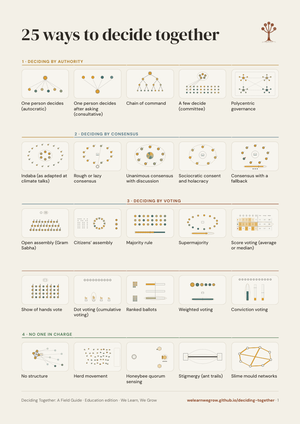 25 ways to decide togetherFree download · PDF · 5 pages · 3.6 MBDownload the PDF
Who this guide is for
It is written for the people who make decisions in and around schools, public or private: students in councils, clubs and activities; teachers; parents; principals and owners; boards and policy makers; and the NGOs and universities that work with schools. Each structure is shown alongside the social forces that shape it, the pressures inside any group such as who speaks first, who stays quiet and who copies the crowd. The same structure can work well or badly depending on the context.